

Secondary Principal Communications and
Academic Leadership Records
Parent Complaint Management, Student Welfare, Academic Oversight, Staffing Decisions, and Educational Continuity
This page presents documents, correspondence, and supporting evidence relating to the Secondary Principal function at International Christian School Nonthaburi (ICSN). The documentary record includes parent complaint discussions, academic program management, staffing decisions during a medical crisis, student welfare concerns, and communications regarding educational continuity.
The documents indicate that significant employment and academic decisions were made while a teacher was experiencing a severe medical emergency. The record includes discussions concerning parent complaints, replacement planning, classroom transitions, student performance, and administrative responses during that period.
The majority of the documents presented on this page were preserved by a former employee directly involved in the events described. Similar procedures and decision-making patterns have been alleged by multiple current and former staff members. Readers are encouraged to review the original documents and supporting evidence and draw their own conclusions regarding the actions, communications, and decisions reflected in the record.

Matt Walton - Secondary Principal
Academic Leadership and Student Welfare
The documents presented in this section relate to Matt Walton's role as Secondary Principal at International Christian School Nonthaburi (ICSN). The record includes communications concerning academic programs, classroom management, student welfare, staffing decisions, parent concerns, and administrative oversight during the period under review. Several documents address educational continuity, student outcomes, and leadership responses during a significant medical emergency affecting a member of staff.
Parent Complaints, Staffing Decisions, and Educational Continuity
Several documents concern parent complaint allegations and the actions taken in response. The record allows readers to examine how concerns were not investigated, documented but ultimately relied upon in employment and academic decisions. Communications also address replacement planning, AP course continuity, classroom transitions, and the reassignment of teaching responsibilities while medical treatment and recovery options were still being evaluated.
Documentary Record and Independent Review
The majority of the documents presented on this page were preserved by a former employee directly involved in the events described. Similar concerns regarding administrative procedures, complaint handling, student welfare, and staffing decisions have been raised by multiple current and former staff members.
Readers are encouraged to review the original documents and supporting evidence and draw their own conclusions regarding the communications, decisions, and actions reflected within the documentary record.
Employment Communications
This section contains correspondence, administrative communications, and supporting records relating to the actions and decisions of ICSN Secondary Administration.
The documentary record includes materials provided by current and former employees, parents, and other individuals with direct knowledge of the matters discussed.
Readers are encouraged to review the original documents and supporting evidence and draw their own conclusions regarding the actions, communications, and decisions reflected in the record.

Instructional Leadership, Teacher Support, and Administrative Oversight
Parent Complaints, Curriculum Management, Teacher Welfare, and School Systems
- No evidence of a formal teacher evaluation system.
- Parent complaints appear to have bypassed direct teacher resolution.
- Requests to meet with parents were reportedly denied.
- No documented teacher improvement plan was implemented.
- No evidence of a formal teacher welfare or support program.
- Leadership concerns escalated rapidly following a medical emergency.
The record raises questions regarding whether instructional challenges reflected individual performance issues or broader leadership and support deficiencies.

Academic Continuity and Program Management
AP Courses, Curriculum Planning, Student Data, and Instructional Support
- Significant curriculum concerns were raised while the teacher remained hospitalized.
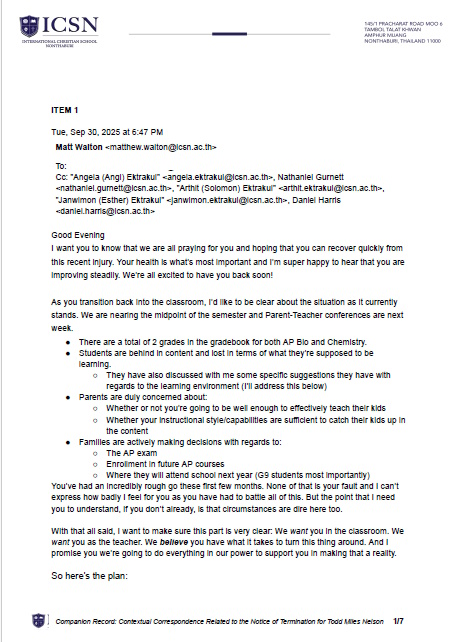
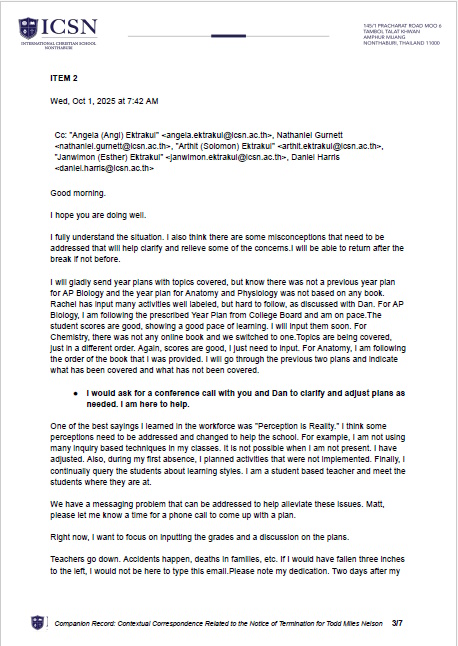
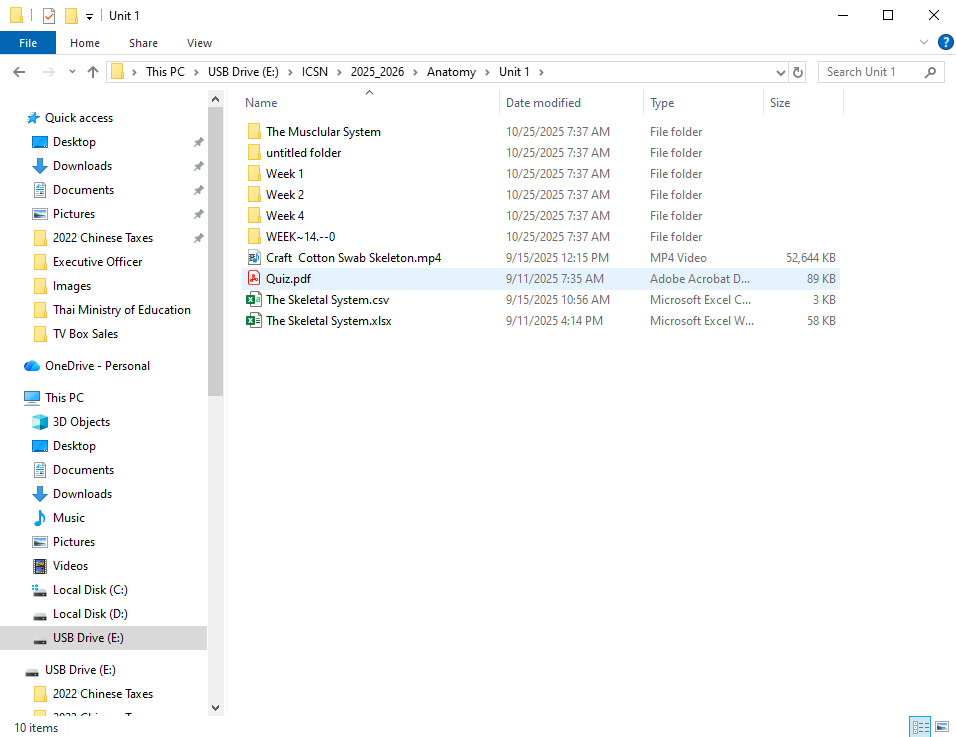
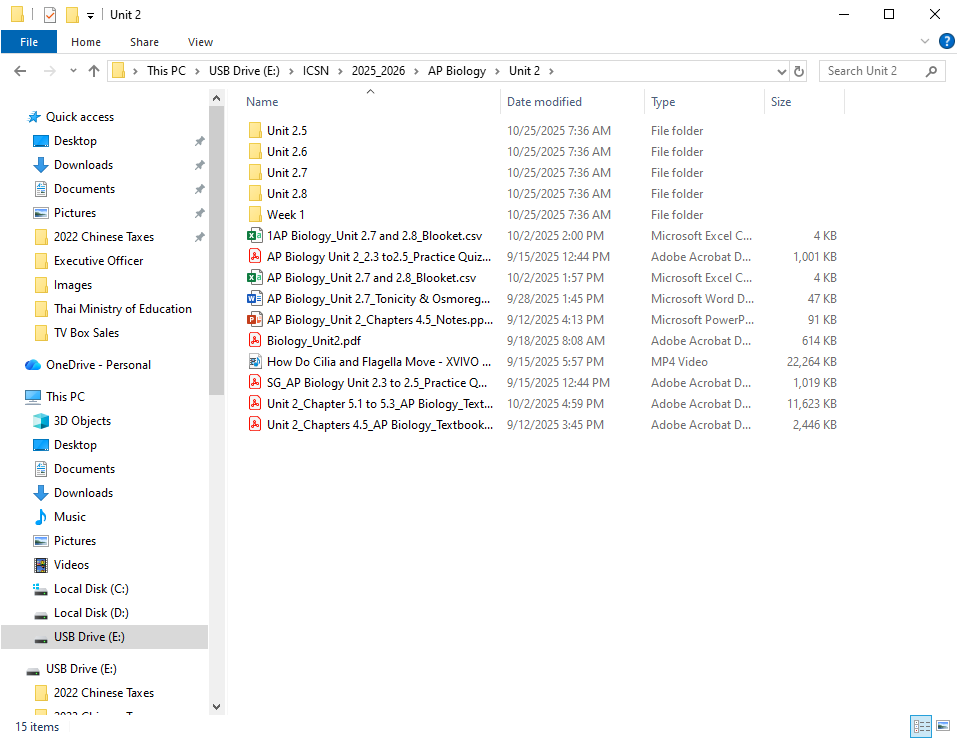
- The teacher advised leadership that grades, lesson plans, assessments, and instructional materials existed.
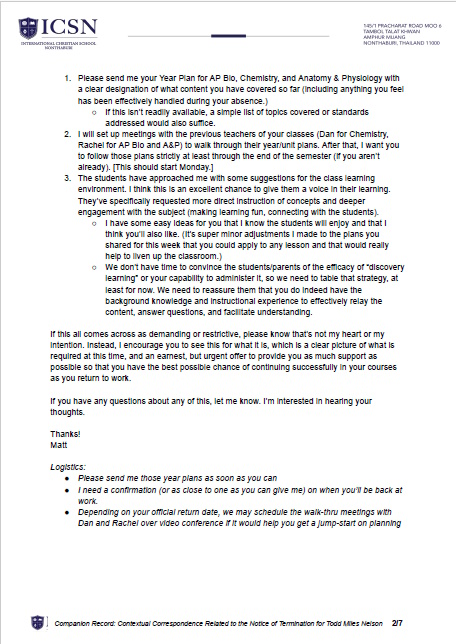
- The teacher repeatedly requested conference calls and direct discussions regarding curriculum, grades, and student progress.
- No conference call or collaborative academic planning meeting occurred.
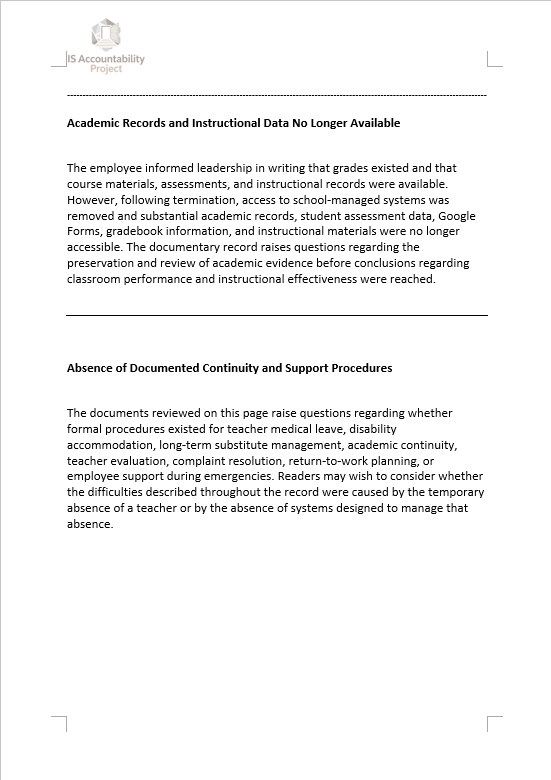
- Approximately two months of student assessment and grade data were not preserved following termination.
- No documented transition process was implemented before replacement decisions were made.
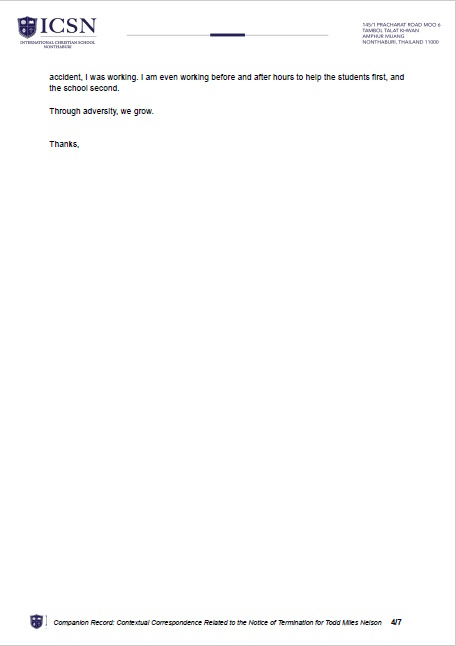
- The teacher continued developing lessons, supporting students, and providing academic information despite being medically incapacitated.
- Course materials demonstrate substantial instructional preparation across multiple subjects.
- The record raises questions regarding whether available academic evidence was reviewed before conclusions were reached.
Effective schools typically preserve student data, maintain instructional continuity, and implement structured transition plans during extended staff absences.

Medical Leave, Disability Accommodation, and Academic Continuity
Medical Emergencies, Disability Accommodation, Classroom Continuity, and Administrative Decision-Making
- Major employment and academic decisions were initiated while the teacher remained hospitalized following a catastrophic spinal cord injury.
- The teacher made multiple requests for direct discussion regarding medical status, recovery timelines, academic continuity, and future employment. No documented conference calls or planning meetings occurred.
- Academic concerns, classroom replacement plans, and employment decisions were discussed before medical outcomes, recovery timelines, or return-to-work options had been established.
- No documented disability accommodation process appears in the record.
- No documented return-to-work plan was developed despite ongoing communication regarding recovery.
- The teacher continued providing lesson plans, curriculum information, grades, and academic support while medically incapacitated.
- No documented long-term substitute or transitional staffing strategy appears to have been implemented.
- The record raises questions regarding how educational continuity was managed during the medical emergency.
Effective schools typically coordinate medical accommodation, instructional continuity, substitute support, and return-to-work planning simultaneously rather than treating them as separate issues

Teacher Retention, Professional Support, and Leadership Systems
Staff Retention, Teacher Welfare, Performance Management, and School Culture
- The documentary record raises questions regarding the existence of formal staff support and welfare systems.
- No employee handbook appears to have been provided to newly hired staff.
- No formal teacher evaluation framework appears in the documents reviewed.
- No documented mentoring, coaching, or structured professional support system was identified.
- The record raises questions regarding how staff concerns, parent complaints, and performance issues were communicated and resolved.
- Of seven newly hired secondary staff members, only two reportedly returned for a second academic year, raising questions regarding retention and organizational stability.
- Effective schools typically maintain systems designed to support, develop, and retain qualified educators rather than relying upon frequent staff turnover.
Readers may wish to consider whether the challenges documented throughout the record reflect isolated personnel issues or broader organizational and leadership deficiencies.
Documentary Record Review: Secondary Principal Communications, Academic Continuity, and Teacher Support
The documents presented on this page relate to the Secondary Principal's role in instructional leadership, teacher support, academic continuity, and employment decision-making during a period of medical emergency. The record includes communications regarding parent concerns, curriculum planning, classroom performance, staffing decisions, medical leave, and administrative responses following a catastrophic injury. Together, these documents raise broader questions regarding continuity planning, substitute management, disability accommodation, teacher evaluation procedures, complaint-resolution processes, and the extent to which available academic information was reviewed before significant decisions were made. Most documents were preserved by a former employee directly involved in the events described and are presented for independent review and evaluation.
IIndependent Analysis of Secondary Principal Records
Teacher Support, Continuity Planning, and Leadership Systems
- No evidence of a formal teacher support program.
- No documented teacher welfare or recovery plan following a catastrophic injury.
- No evidence of a structured long-term substitute plan.
- No documented return-to-work planning process.
- No evidence that instructional continuity systems were activated.
- A school should not enter a state of operational crisis because one teacher becomes injured.
- Effective schools typically maintain continuity plans for extended absences.
- The documents raise questions regarding whether leadership systems existed to manage foreseeable emergencies.
- Multiple staffing and instructional concerns appear to have emerged immediately following the teacher's absence.
Readers may wish to consider whether the underlying issue was the teacher's absence or the absence of effective leadership systems.
Curriculum Oversight and Academic Management
- Curriculum concerns were raised while the teacher was hospitalized.
- The teacher advised that course materials, plans, and grades existed.
- Requests for discussion and clarification were made by the teacher.
- No conference call or collaborative planning meeting occurred.
- AP Biology and Anatomy course materials demonstrate substantial instructional preparation.
- The documents raise questions regarding whether existing materials were reviewed before decisions were made.
- Year planning documentation appears limited in several areas.
- The teacher stated that some year plans consisted primarily of textbook sequencing.
- Replacement staff later modified or replaced portions of existing course structures.
The record raises questions regarding academic oversight, curriculum review, and continuity procedures.
Consultation, Communication, and Decision-Making
- The teacher requested direct discussion regarding grades, curriculum, and recovery timelines.
- Multiple requests for consultation were made.
- Major employment decisions were communicated by email.
- The documentary record contains no evidence of a formal meeting before those decisions.
- Decisions regarding classroom replacement appear to have been made rapidly.
- The teacher remained hospitalized and medically incapacitated during much of this period.
- Later documents state that additional consultation would not have changed the outcome.
- The record raises questions regarding how that conclusion was reached without meaningful consultation.
- Normal employment practices generally involve discussion before major employment decisions.
Readers may wish to consider whether procedural fairness was adequately observed.
Employment Actions and Separation Conditions
- Significant employment decisions occurred during an ongoing medical emergency.
- Continued employment options were altered while recovery remained uncertain.
- The separation package required acceptance within approximately three days.
- The agreement included release, confidentiality, and hold harmless provisions.
- Continued benefits were linked to acceptance of the agreement.
- Medical insurance was a central issue throughout the correspondence.
- The employee faced a serious spinal cord injury and uncertain medical future.
- The documents raise questions regarding the timing of these requirements.
- The practical consequences of declining the agreement were substantial.
- Readers may wish to consider whether the process reflected appropriate employee protections during a medical crisis.