

Child Welfare and Safeguarding
Documented Student Welfare, Safeguarding Protocols,
and Family Support Systems during a Medical Crisis
This section reviews documented child welfare guidelines, student safeguarding protocols, enrollment continuity policies, and institutional communication records to evaluate how educational environments support vulnerable students and their families during acute medical emergencies and prolonged instability.
Documented Student Welfare and Safeguarding Review

An objective analysis of administrative records, homeroom correspondence, and school communications raises important structural questions regarding standard international education safeguards. This review focuses on the following key administrative areas:
- Student Welfare Reporting: Procedures for tracking, documenting, and responding to student peer-interaction concerns and emotional distress.
- Safeguarding Monitoring: The presence of documented safety plans, risk assessments, and targeted support systems for vulnerable dependents.
- Family Support Coordination: Institutional outreach and communication structures established to support families experiencing acute medical crises, hospitalization, or sudden trauma.
- Enrollment Stability: Safeguards governing a dependent student's continued enrollment and educational access during active employment transitions or contractual discussions involving a parent.
- Communication Standards: Administrative guidelines concerning internal communications regarding staff transitions to minimize secondary social or emotional impacts on dependent students.
Welfare Communications and Administrative Correspondence
This section documents routine administrative and welfare communications exchanged during the academic year. These records are preserved as objective, primary-source documentary evidence to help readers evaluate the timeline, consistency, and nature of institutional responses during periods of documented family vulnerability.
Documented Academic and Family Transitions
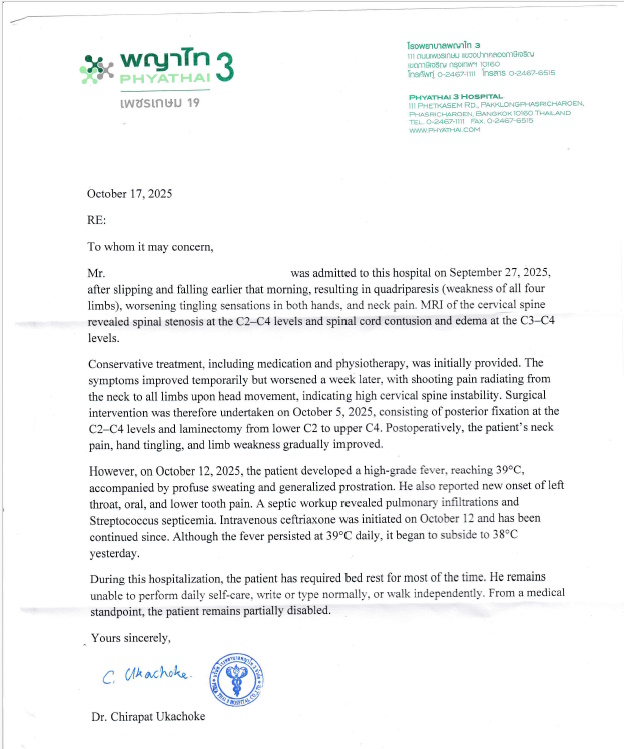
The records presented below compile communications, enrollment records, medical certifications, and academic transition files concerning a student navigating an acute family medical emergency.
These documents outline a period during which a family experienced a severe, documented spinal cord injury requiring emergency surgery, extended hospitalization, and subsequent rehabilitation. The records trace the student's transition between physical school settings and temporary online learning environments, as well as the administrative coordination surrounding these transitions.

Documented Welfare and Enrollment Actions
Documented records, correspondence logs, academic transition plans, and administrative files tracking student welfare reporting, online learning configurations during a family medical crisis, and the administrative coordination of student enrollment.

Student Welfare and Peer Reporting
Peer Interactions and Reporting Protocols
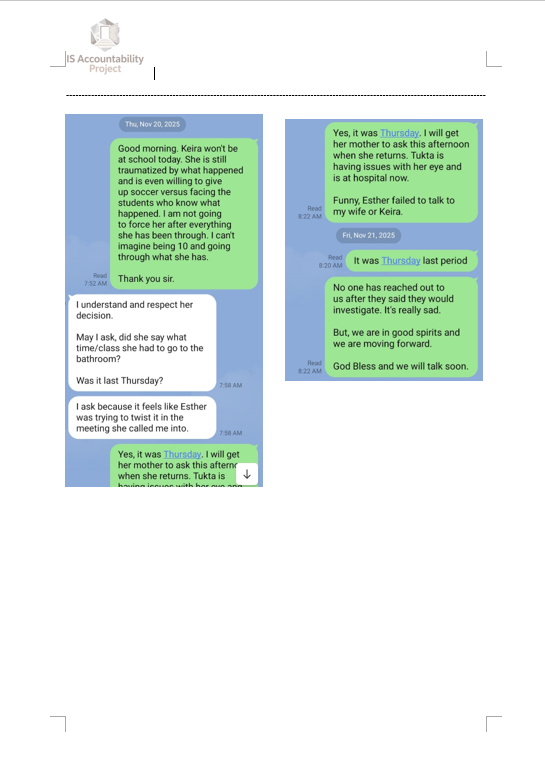
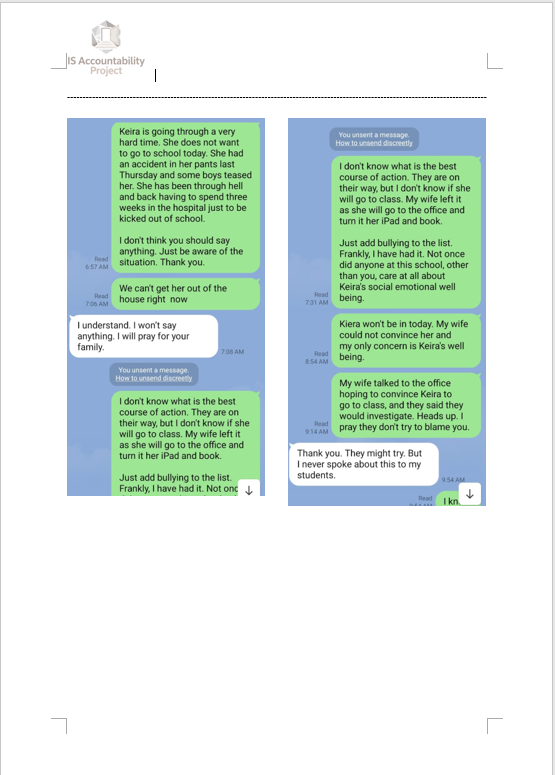
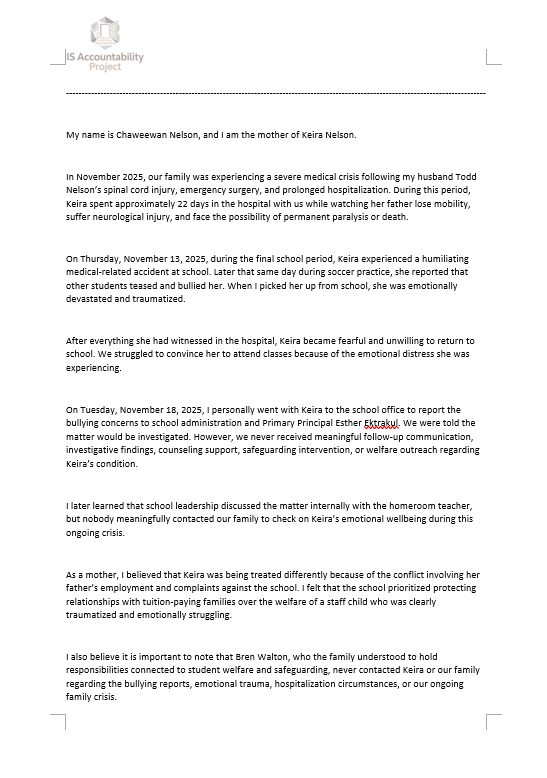
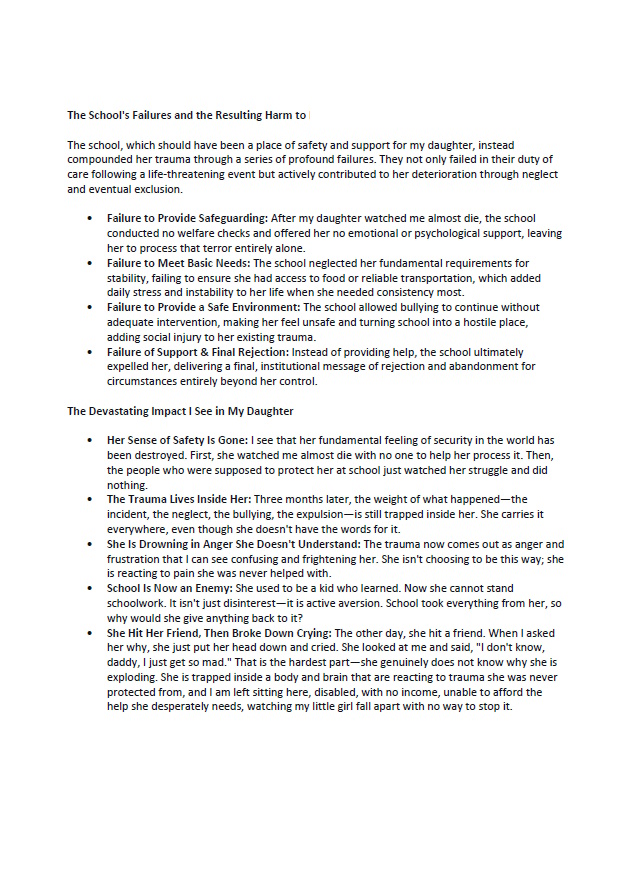
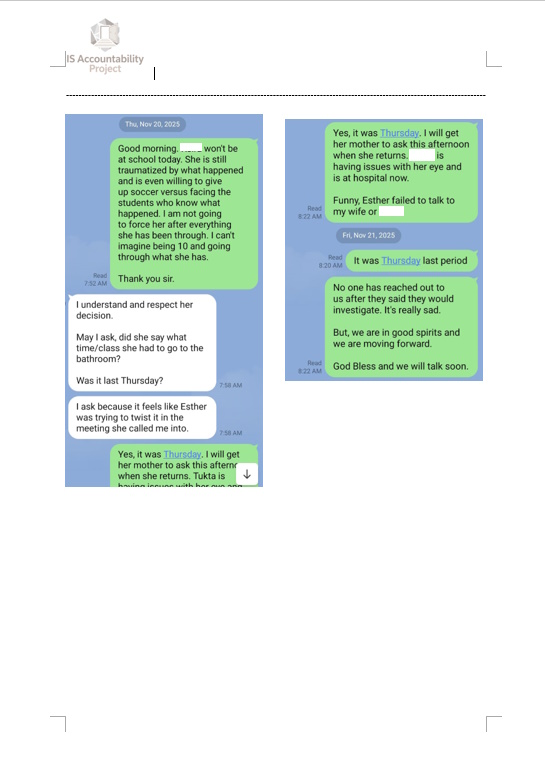
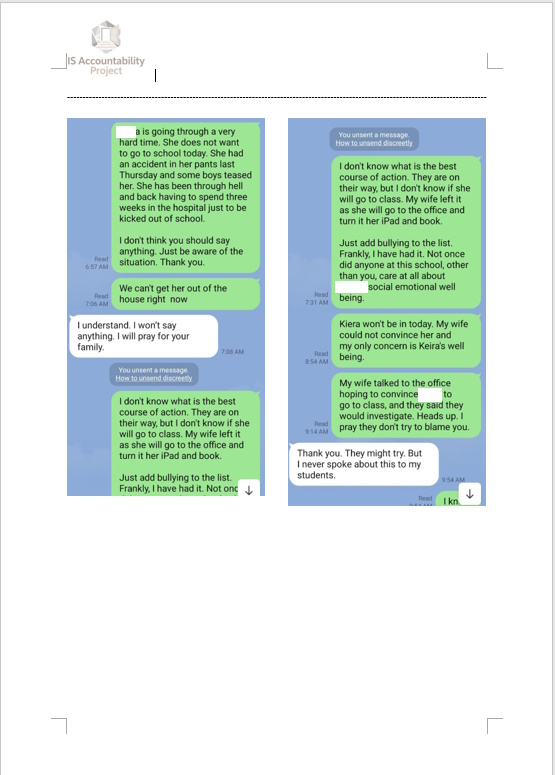
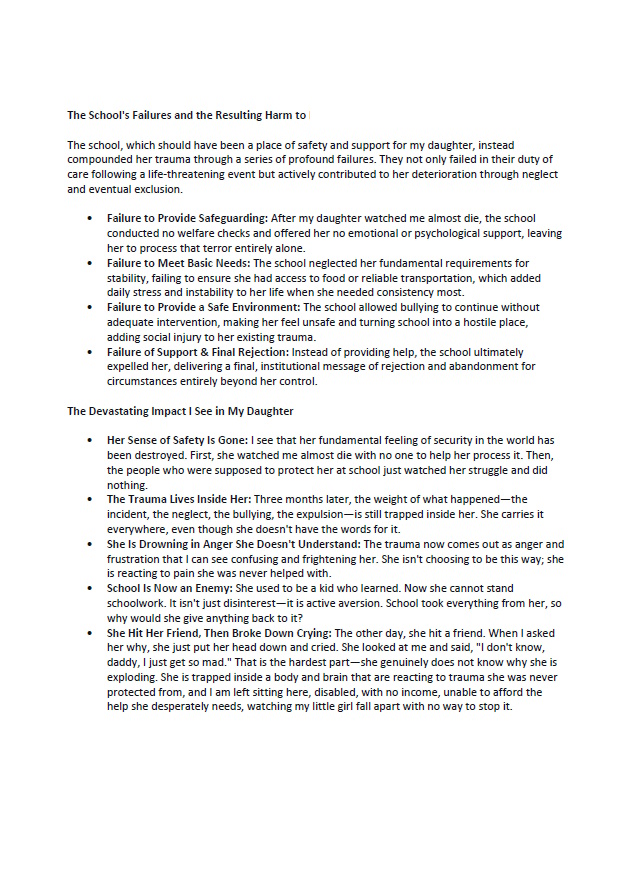
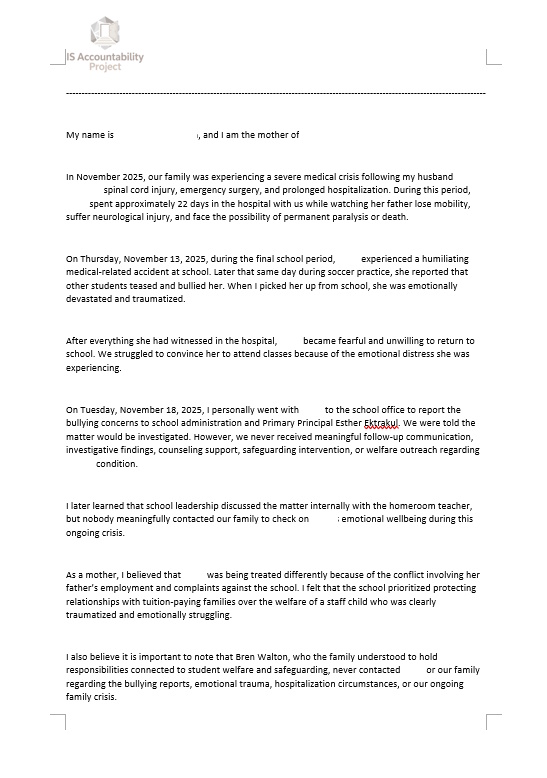
Welfare Reporting: Documentation tracking reports of student emotional distress and peer-related social challenges within the learning environment.
Administrative Record-Keeping: An absence of formal, written follow-up reports, internal risk assessments, or documented peer-intervention strategies following written welfare notifications.
Teacher Correspondence: Informal email correspondence with homeroom staff regarding classroom dynamics, showing a lack of a structured, school-guided safety or support plan.
Support Monitoring: Inquiries from parents seeking active, monitored safeguarding plans to address ongoing social and emotional challenges.

Alternative Learning and Medical Transitions
Crisis Accommodations and Virtual Transitions
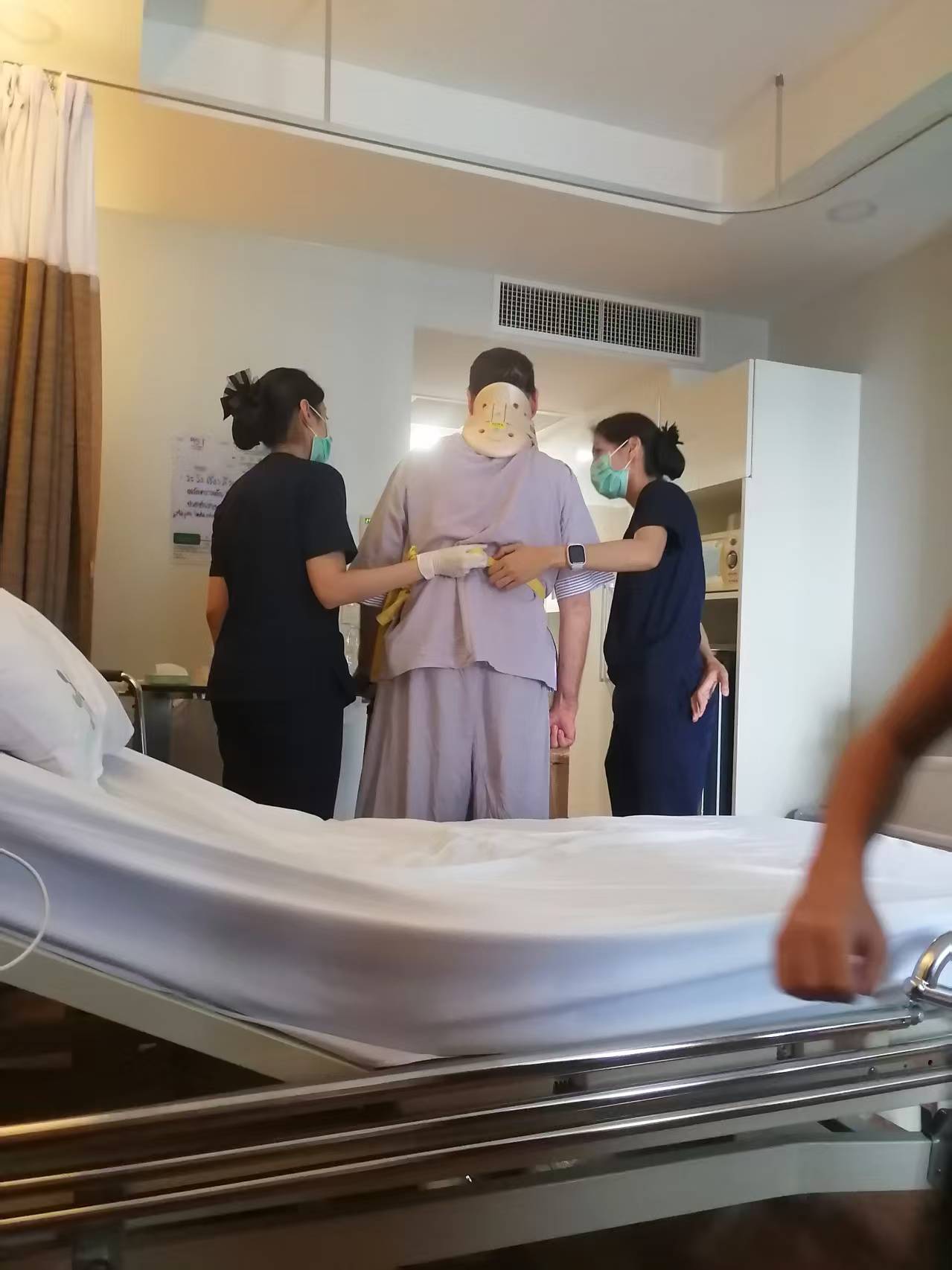
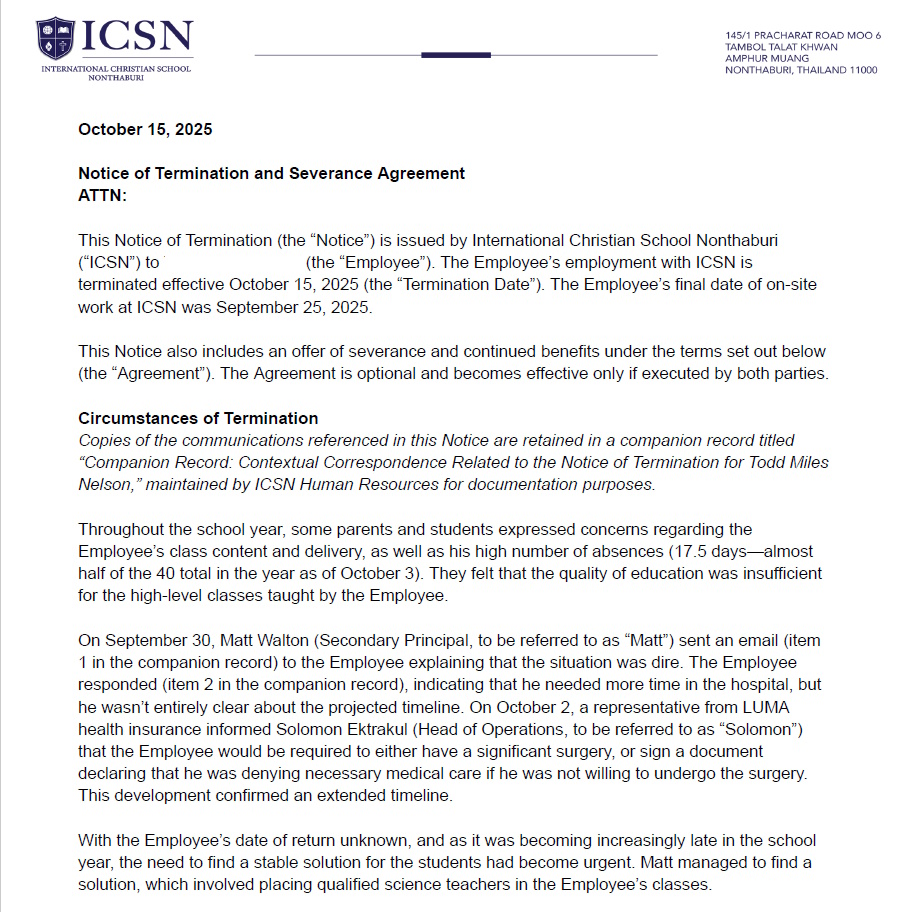
Medical Instability: Student transition records during a period of acute family medical crisis, including a parent's major spinal surgery and prolonged hospitalization.
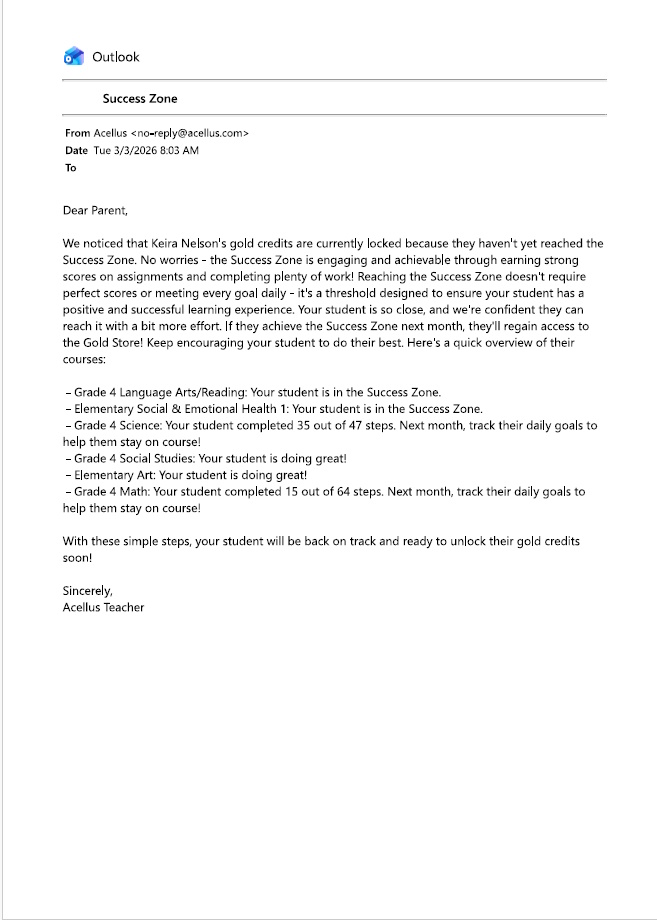
Online Learning Access: Documented coordination and setup of short-term online learning modules to ensure academic continuity while the household stabilized.
Academic Guidance: A lack of structured, school-provided guidelines, specialized online check-ins, or dedicated pastoral oversight during the virtual learning transition.
Reintegration Planning: correspondence regarding the student's planned return to physical classes and the administrative steps required to facilitate a smooth transition.


Enrollment Status and Contractual Linkage
Enrollment Access and Separation Terms
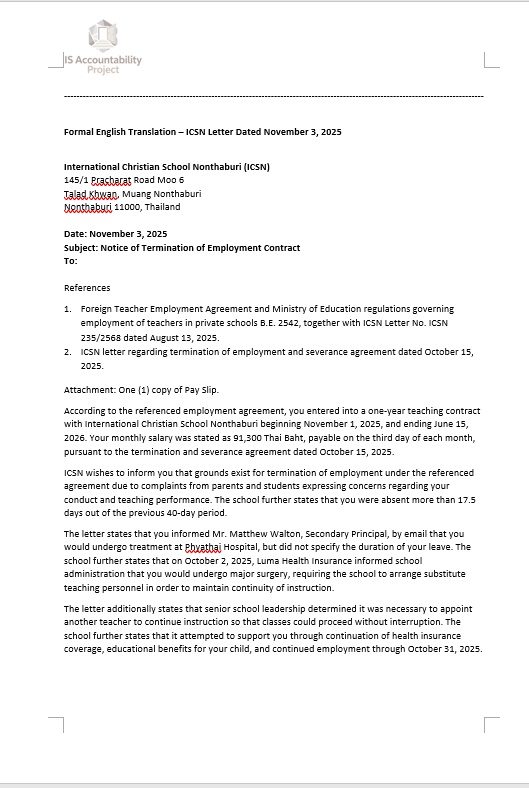
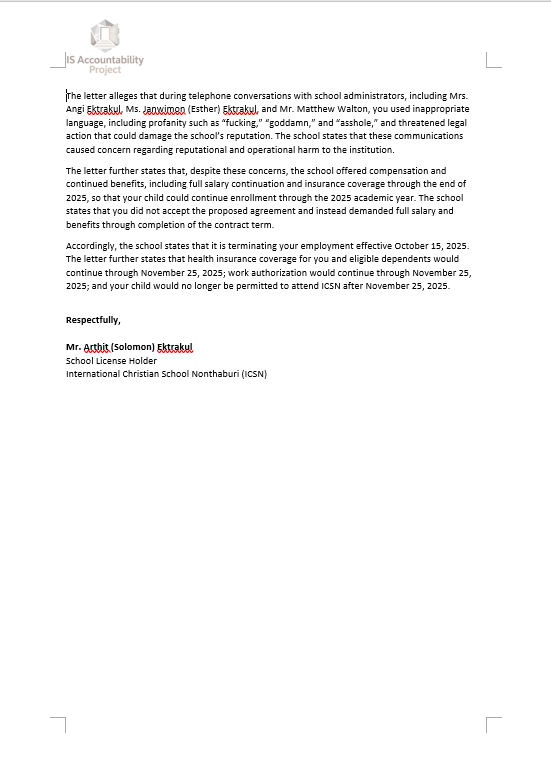
Enrollment Negotiations: Administrative correspondence linking the dependent student's continued school enrollment and attendance directly to adult employment dispute negotiations.
Contractual Conditions: Written terms outlining the conditioning of a student's school access on the parent signing specific employment release or confidentiality agreements.
Administrative Precedent: Rulings and compliance guidelines from regional educational oversight bodies regarding the separation of child welfare/enrollment from adult labour disputes.
Family Impact: The documented impact of utilizing a student's educational access as a point of leverage during contractual transition discussions.
Sudden Departure and Educational Relocation
Transition Timelines and Departure Records
Final Transition Timeline: Administrative records documenting the sudden end of the student's enrollment following the breakdown of employment transition negotiations.
Records Transmittal: Challenges and administrative timelines experienced by the family when requesting official academic transcripts, progress reports, and health records.
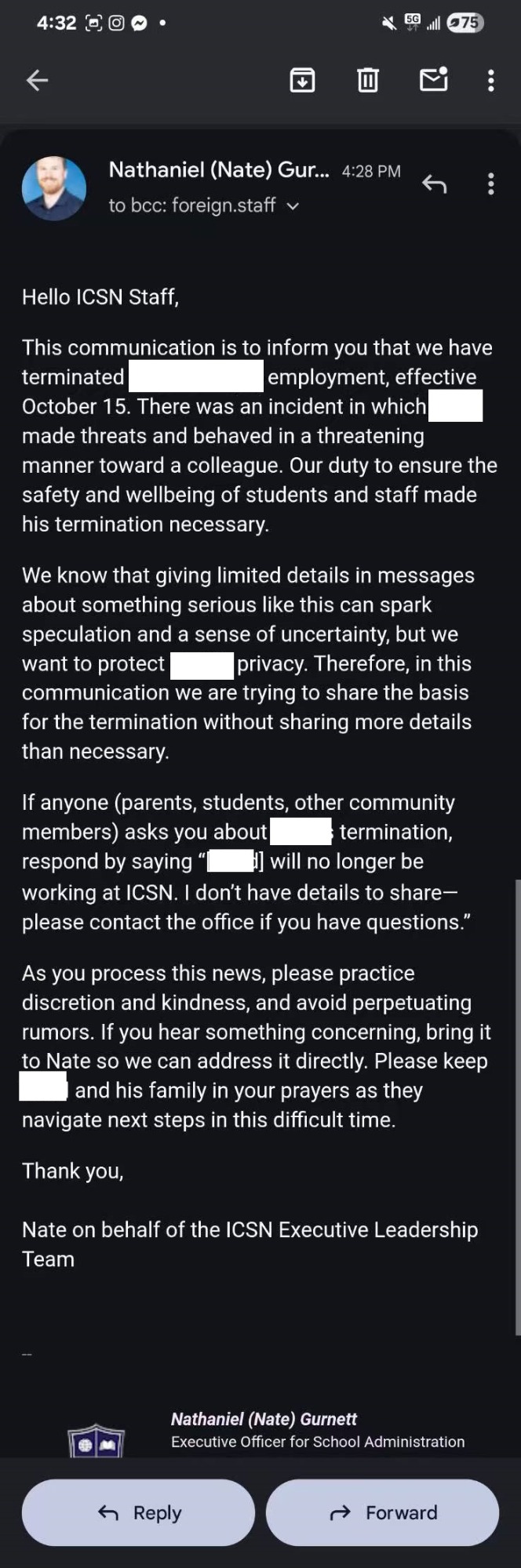
Community Communication: Broad, school-wide communications distributed by the administration regarding the family’s departure, without coordination to minimize social stigma for the child.
Educational Continuity: The rapid setup of alternative educational enrollment to protect the student’s academic progress and emotional well-being during a highly unstable transition.
Chat GPT 5.2
Analysis Model A
Finding 1 – Documentation of Student Welfare Interventions
- Document Language: Correspondence detailing reported student distress and peer-related concerns, without corresponding school safety plan records.
- International Standard: Safeguarding frameworks mandate that formal student welfare reports trigger a documented internal risk assessment and an active, monitored safety plan.
- Analysis: The absence of a documented, structured intervention plan following a student-welfare report indicates a gap in standard safeguarding documentation.
- Classification: Raises Child Welfare & Safeguarding Concerns
Finding 2 – Coordination of Trauma-Informed Support
- Document Language: Medical certifications detailing emergency spinal surgery and hospitalization, alongside communications indicating a lack of coordinated school-based pastoral outreach.
- International Standard: Schools are expected to deploy proactive, trauma-informed support packages—including flexible learning plans and counseling liaisons—when a student’s household experiences acute trauma.
- Analysis: Relying on standard administrative routines without deploying tailored support structures during a family crisis can compound a vulnerable student's academic and emotional challenges.
- Classification: Raises Child Welfare Concerns
Finding 3 – Separation of Enrollment and Employment Matters
- Document Language: Correspondence linking a dependent child's active enrollment and school access directly to the resolution of a parent's employment separation agreement.
- International Standard: Best practices in educational administration dictate that a child's safeguarding, welfare, and educational continuity should be handled independently of adult employment disputes or legal negotiations.
- Analysis: Connecting a student's continued school attendance to employment separation terms, such as release agreements or confidentiality clauses, introduces institutional conflicts of interest.
- Classification: Raises Institutional Response & Welfare Concerns
Claude Sonnett 4.6
Analysis Model B
Finding 1 – Mitigation of Secondary Social Impacts
- Document Language: Broad, school-wide email communications regarding staff termination distributed during a student's active transition.
- International Standard: Administrative communications concerning staff separations should be highly restricted to prevent public speculation, social stigma, or secondary emotional distress from affecting dependent students within the community.
- Analysis: Distributing sensitive allegations to a wide internal audience without a structured communication plan increases the risk of social exclusion or distress for the associated child.
- Classification: Raises Institutional Response Concerns
Finding 2 – Reintegration and Academic Continuity Planning
- Document Language: Transition plans moving the student to external online schooling after a period of hospitalization exposure and withdrawal.
- International Standard: Educational institutions should provide clear, guided pathways, designated contact staff, and structured transition checklists to ensure smooth academic continuity for students undergoing emergency school changes.
- Analysis: Navigating complex transitionary and home-learning settings without formal, school-guided integration frameworks increases administrative and educational friction.
- Classification: Raises Child Welfare Concerns
Independent AI Child Safeguarding Analysis
The following evaluations represent independent, objective reviews of standard student welfare protocols, administrative correspondence, and transition records. They are provided strictly for educational and informational purposes to illustrate how typical institutional policies compare to international child safeguarding standards.