

Staff Disability Accommodations
and Medical Recovery Policies
An Evaluation of Medical Leave, Return-to-Work Frameworks,
and Institutional Support Systems for Educators
The records and discussions presented on this page analyze systemic institutional policies regarding medical leave, disability accommodations, and return-to-work protocols for international teaching staff. Ensuring clear, legally compliant, and supportive frameworks for educators undergoing medical recovery is vital for maintaining both instructional continuity and a safe workplace. This analysis reviews general administrative responses to staff health limitations, standard procedures for accommodation requests, and the protection of academic records during personnel transitions.
Historically, administrative management of staff health crises can highlight broader systemic needs within an international school's human resource framework. By examining standardized practices for documenting medical incapacity and managing temporary personnel adjustments, we can identify areas where institutional policies must protect both employee wellness and operational integrity. A robust, transparent accommodation framework ensures that all faculty members receive equitable treatment during periods of documented medical recovery.
Policies on Medical Incapacity and Leave Request Procedures
Comparison of disability accommodation expectations, medical recovery communications, instructional record concerns, and documented employment actions during medical incapacity.
Institutional Frameworks for Medical Incapacity
IInternational schools require clear and structured policies to address instances when an educator experiences medical incapacity. Standard industry guidelines advocate for a transparent process where medical documentation is submitted to human resources to establish appropriate accommodations or temporary leave. The primary objective is to balance the health needs of the faculty with the continuity of student learning.
Reviewing the institutional correspondence and administrative decisions at ICSN reveals how health-related requests are processed and evaluated. Analyzing these systems highlights the importance of standardized protocols that prevent arbitrary decision-making and ensure that medical leave is granted objectively based on professional healthcare evaluations.

Documented Employment Actions & Communications
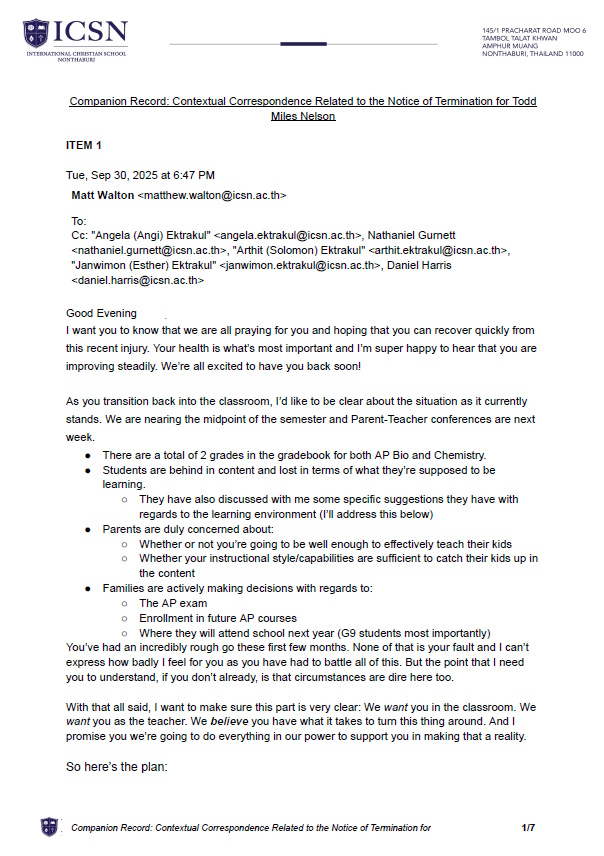
- Gradebook administration parameters raised during recovery
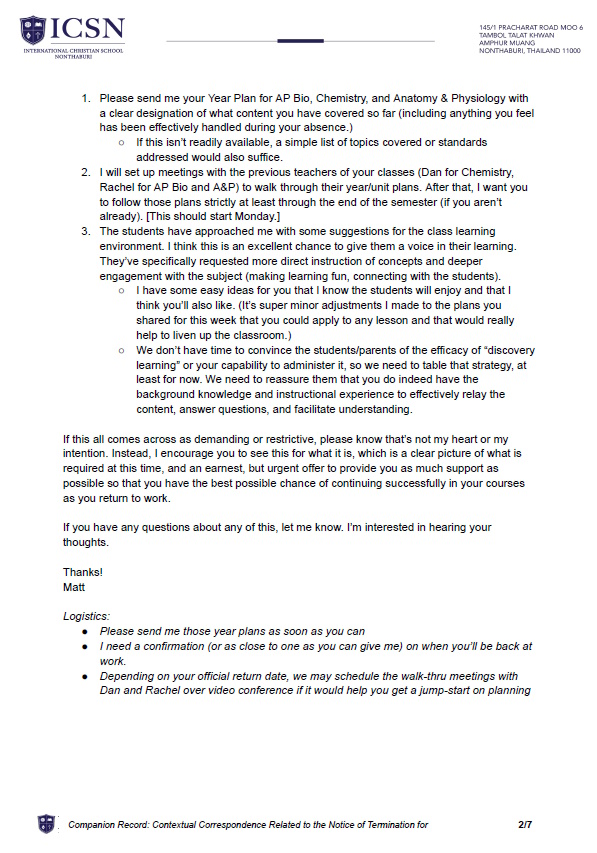
- Return-to-work framework and support expectations
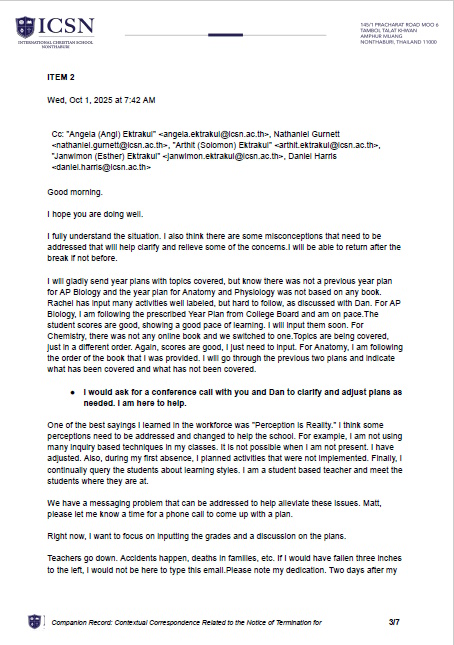
- Procedures for policy discussions and clarification
- Addressing instructional capability and classroom support concerns
Instructional Record & Data Concerns
- Management of instructional records and student performance data during transitions
- Handling and archiving of student grading materials
- Systematic and transparent communication protocols regarding coverage arrangements
Legal Frameworks and Employment Protections
The purpose of this section is to compare documented actions and communications with disability accommodation principles, employee protections, and medical leave provisions established under Thai law. Readers may independently review the legal standards and the supporting records to determine whether the documented responses were consistent with those protections.

Statutory Sick Leave
Labor Protection Act B.E. 2541, Section 32
Documented Employment Action
Records document employment status and contract termination decisions occurring during periods of documented medical leave, physical recovery, and active rehabilitation. The documentation outlines the institutional timeline for evaluating teaching contracts and administrative status while staff members remain under medical care and recovery protocols.

Disability Non-Discrimination
Persons with Disabilities Empowerment Act B.E. 2550, Section 27
Documented Employment Communications and Accommodation Issues
Records document ongoing communications regarding medical accommodations, classroom teaching adjustments, physical accessibility requests, and returning work expectations. The documentation tracks institutional responses to medical recommendations outlining necessary workplace modifications during rehabilitation.

Constitutional Equality
Constitution of Thailand, Section 30
Documented Employment Actions During Medical Recovery
The records document changes to professional responsibilities, academic communication restrictions, access to school grading systems, and administrative reassignment during periods of medical recovery. These materials permit readers to analyze the administrative consistency of actions taken during a staff member's active convalescence.

Employer Obligations Under CRPD
UN Convention on the Rights of Persons with Disabilities (ratified by Thailand, 2008)
Documented Agreement Terms and Institutional Actions
Records document employment contract separation discussions, health insurance continuity provisions, confidentiality protocols, and release terms proposed during a period of documented medical recovery. These agreements show the administrative frameworks used to handle staff contracts during health-related transitions.
Disability, Incapacitation, and Duty of Care
Under Thailand’s Persons with Disabilities Empowerment Act B.E. 2550 (2007) and the Labor Protection Act B.E. 2541 (1998), employers are legally obligated to protect workers who are incapacitated due to injury, illness, or disability and to avoid discrimination on the basis of disability. The records presented below document communications occurring during a period of documented medical recovery, hospitalization, and temporary physical limitations of teaching staff. The materials include discussions regarding employment status, instructional responsibilities, accommodation-related concerns, administrative decision-making, and responses to documented medical limitations. These records are presented to allow readers to compare documented actions and communications with disability accommodation and employee protection standards established under Thai law.
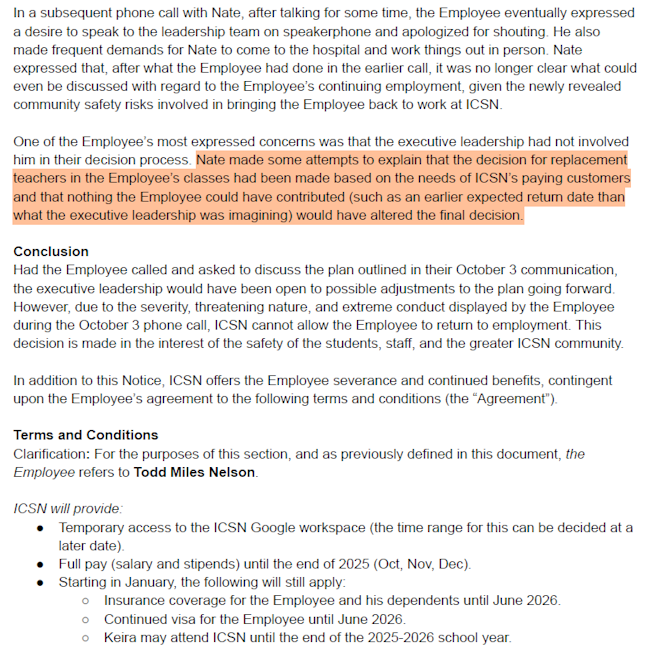
"The Decision Was Already Final"
Correspondence demonstrates administrative priorities during staff transitions, including references to students and parents as "paying customers" when addressing instructional coverage. These records highlight how commercial priorities are balanced against employee health protections.
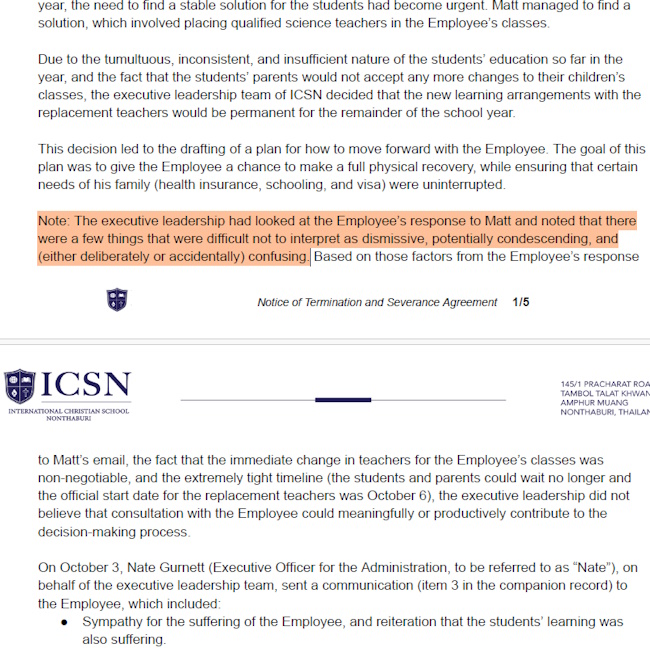
"Input Was Not IncludedI"
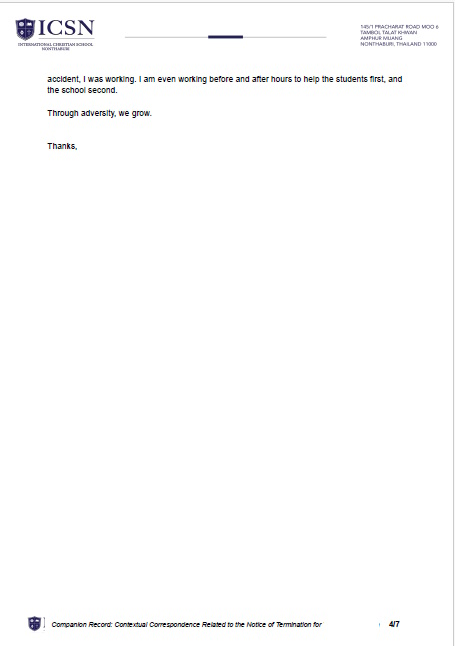
When recovering staff members requested direct communication or phone consultations to clarify physical limitations and return-to-work parameters, administrative leadership moved forward with decisions without incorporating the employee's input. No direct consultation occurred.
Documented Internal Communications - In There Own Words
Documented communications presented in their own words, including references to "paying customers," finalized administrative decisions, and institutional responses to accommodation and instructional concerns during periods of staff medical recovery.